

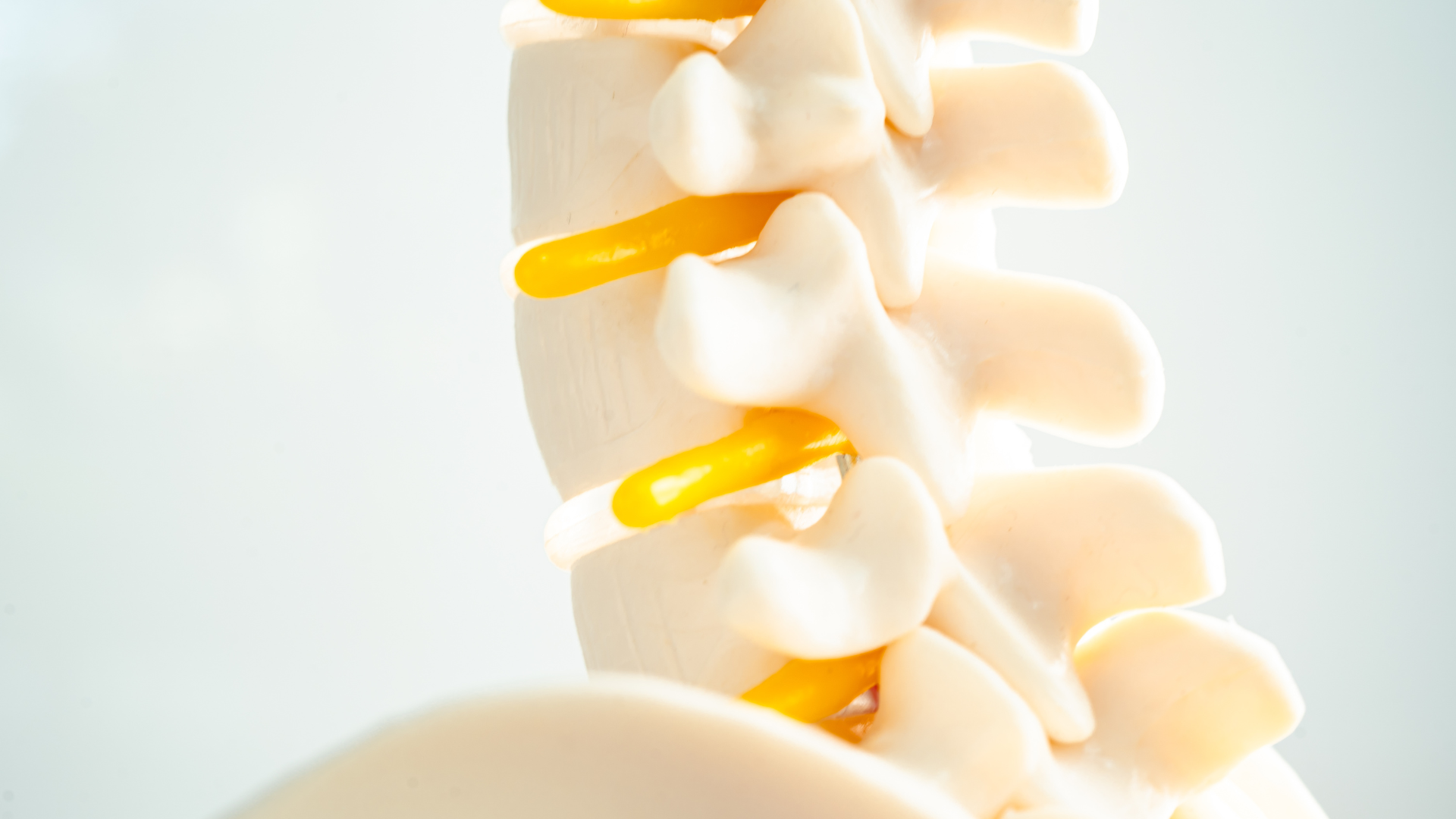
Living with constant back pain can make even the simplest tasks feel overwhelming. When physical therapy, medication, or lifestyle changes stop providing relief, it may be time to consider a more advanced option. Artificial disc replacement is recommended when the spinal discs are too damaged to function properly, but spinal motion still needs to be preserved.
This innovative procedure replaces the degenerated disc with an implant that restores flexibility and reduces pain — helping patients regain comfort and movement in their daily lives.
At Spine Center Vallarta, this surgery is often suggested for patients with degenerative disc disease who haven’t improved after months of conservative treatment. It’s typically performed in the cervical or lumbar spine, where one specific disc is identified as the main pain source.
Dr. Gustavo Navarro evaluates each patient thoroughly, ensuring that the spine’s structure and bone health make them a good fit for this motion-preserving procedure.
When Is Artificial Disc Replacement Recommended?
Artificial disc replacement is a modern surgical option for individuals with chronic back or neck pain caused by a single damaged intervertebral disc. It’s often considered after conservative treatments — such as therapy or injections — no longer provide relief. Selecting the right patient is essential, as not every spinal condition benefits from this type of procedure.
Primary Indications for Surgery
The procedure is typically recommended for patients diagnosed with degenerative disc disease (DDD) who experience persistent lower back or neck pain. The discomfort should come mainly from one or two discs rather than from muscle, bone, or nerve issues. Candidates must also have normal spinal alignment and healthy facet joints to ensure optimal results.
Unlike spinal fusion, which eliminates motion by joining vertebrae, disc replacement preserves natural movement. Clinical research published in the European Spine Journal shows that maintaining motion can reduce stress on nearby discs and improve long-term outcomes.
Conservative Treatments Before Surgery
Most patients try non-surgical care for at least six months before surgery. This includes physical therapy, anti-inflammatory medication, and activity modification. If imaging confirms that a single disc is the source of pain and other structures are stable, surgery may then be the most effective solution.
When the Procedure Is Not Recommended
Certain conditions make disc replacement unsafe or less effective, including osteoporosis, scoliosis, facet joint arthritis, or significant spinal instability. Patients with multiple-level degeneration or previous fusion may be better candidates for other surgical options.
Evaluating Candidacy for Artificial Disc Replacement
Dr. Navarro conducts a detailed evaluation using imaging and motion studies to determine whether artificial disc surgery is the right approach. This evaluation focuses on identifying the exact disc causing pain and confirming that the surrounding structures can support an implant safely.
Diagnostic Imaging and Assessment
MRI and X-rays are used to assess the degree of disc degeneration and spinal alignment, while CT scans help evaluate bone density and structural integrity. These studies are essential for determining whether disc replacement is both safe and beneficial for each patient.
Ideal Candidate Profile
Good candidates for disc replacement generally meet the following criteria:
- Pain localized to a single damaged disc
- Healthy facet joints and bone density
- No significant deformities or spinal instability
- Failure of conservative treatment for at least six months
Each of these factors ensures that the implant can function properly, preserving spinal motion while alleviating pain.
The Surgical Procedure
Artificial disc replacement involves removing the damaged disc and replacing it with a specialized implant that maintains motion between vertebrae. Dr. Navarro typically performs this procedure through an anterior approach, accessing the spine from the front to minimize trauma to muscles and nerves.
Implant Placement and Recovery
The damaged disc is carefully removed, and the implant — made of titanium or cobalt-chrome with a polymer core — is positioned to restore alignment and motion. The procedure often results in faster recovery and improved mobility compared with spinal fusion. Most patients are up and walking within a day after surgery, returning to light activity in just a few weeks.
Recovery and Long-Term Outcomes
After disc replacement surgery, most patients experience significant pain relief and greater flexibility. Long-term studies confirm that motion preservation helps reduce stress on surrounding discs and supports better spinal health over time.
Recovery time varies depending on the patient’s age, health, and adherence to postoperative care, but with personalized physical therapy and regular follow-up, many return to normal routines within a few months.
Frequently Asked Questions
What are the main indications for artificial disc replacement?
This surgery is recommended for patients with single-level disc degeneration who haven’t found relief through non-surgical treatment. Candidates should have stable spines and no significant arthritis in the facet joints.
How successful is artificial disc replacement?
Success rates are high when patients are carefully selected. Studies show that most experience long-term pain relief and improved mobility. The L5–S1 level, in particular, responds well when alignment and bone quality are optimal.
What are the possible complications?
Although rare, risks include infection, implant wear, or nerve irritation. These are minimized through precise surgical technique and experienced care, both of which Dr. Navarro prioritizes in every case.
How long does recovery take?
Most patients begin walking within 24 hours and return to light activity in two to four weeks. Full recovery can take several months, depending on physical condition and rehabilitation progress.
Is artificial disc replacement better than fusion?
Both procedures relieve pain, but artificial disc replacement allows for continued movement and may reduce the risk of adjacent segment disease. It’s an excellent option for those who qualify and wish to maintain spine flexibility.
Restoring Motion and Quality of Life with Dr. Gustavo Navarro
Artificial disc replacement represents a new chapter in spine surgery — one focused on restoring movement and lasting comfort. Dr. Gustavo Navarro and his team at Spine Center Vallarta use advanced techniques and personalized care to help patients return to an active, pain-free lifestyle.
If you’re struggling with persistent back pain and wondering whether this procedure could help you, schedule a consultation today and discover the path toward restored mobility and long-term relief.
.webp)
