

Back pain can have many causes, but when discomfort begins to affect multiple areas of the spine, the underlying problem is often more complex than normal age related wear. For some patients, degeneration develops in more than one spinal disc, creating symptoms that are more persistent, more widespread, and often more challenging to diagnose. This condition is known as multilevel degenerative disc disease.
Unlike degeneration that affects a single disc, multilevel disease involves changes at two or more spinal levels. These changes can alter how the spine moves, increase stress on nearby joints and nerves, and lead to a combination of pain, stiffness, and neurological symptoms that interfere with everyday activities. Although the diagnosis may sound concerning, many patients respond well to an individualized treatment plan.
Understanding what multilevel degenerative disc disease means is an important step toward making informed decisions about your care. Recognizing the symptoms, knowing how the condition is diagnosed, and learning about available treatment options can help you manage pain while protecting your long term spinal health.
At Dr. Navarro's practice, patients receive comprehensive evaluations to identify the exact source of their symptoms and determine the most appropriate treatment. Whether care involves conservative therapies or advanced surgical techniques, every treatment plan is designed to improve function, reduce pain, and restore quality of life.
What Is Multilevel Degenerative Disc Disease?
Multilevel degenerative disc disease occurs when degeneration affects two or more intervertebral discs within the spine. Rather than involving a single spinal segment, the condition develops across multiple levels, creating a more widespread pattern of structural changes.
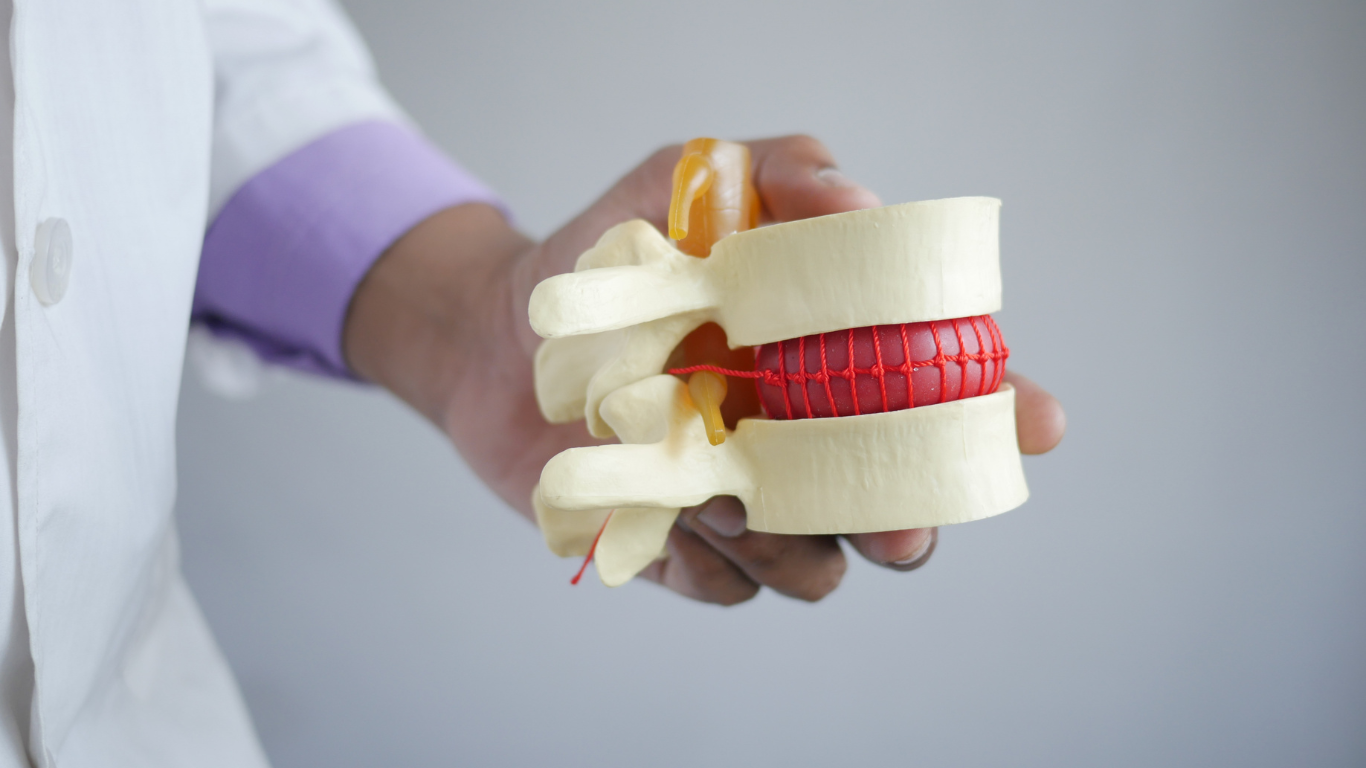
Intervertebral discs act as cushions between the vertebrae, absorbing shock while allowing the spine to move smoothly. Over time, these discs naturally lose water content and elasticity. As degeneration progresses, the discs become thinner, less flexible, and less capable of supporting normal spinal motion.
When several discs are affected, the spine may become less stable. This additional stress can contribute to arthritis of the facet joints, narrowing of the spinal canal, nerve compression, and changes in spinal alignment.
Although the condition most frequently develops in the lumbar spine, it can also affect multiple levels of the cervical spine or, less commonly, the thoracic spine.
What Causes Multilevel Degenerative Disc Disease?
Disc degeneration is a gradual process influenced by several factors. When multiple spinal levels are involved, the cause is often a combination of age related changes and additional mechanical stress.
Natural Aging
The most common cause is the normal aging process. As discs lose hydration over time, they become less resilient and more vulnerable to small tears and progressive deterioration.
Because every spinal level experiences years of movement and loading, degeneration may eventually occur at more than one disc.
Genetics
Some individuals inherit a greater tendency to develop disc degeneration earlier in life. Family history can significantly influence both the rate and severity of spinal changes.
Repetitive Mechanical Stress
Occupations that involve heavy lifting, repetitive bending, prolonged sitting, or frequent twisting place continuous stress on the spine. Over many years, these forces may accelerate degeneration across multiple disc levels.
Previous Spinal Injuries
Traumatic injuries can damage one or more discs, increasing the likelihood of accelerated degeneration in surrounding spinal segments.
Lifestyle Factors
Smoking, obesity, physical inactivity, and poor posture reduce the spine's ability to maintain healthy discs and may contribute to more extensive degeneration over time.
How Multilevel Degenerative Disc Disease Affects the Spine
When degeneration develops at multiple levels, the spine functions differently than it would with a single damaged disc.
As discs lose height, the distance between vertebrae decreases. This change places greater pressure on the facet joints, ligaments, and surrounding muscles. The body attempts to compensate for these structural changes, sometimes leading to abnormal movement patterns and chronic muscle tension.
Reduced disc height can also narrow the openings through which spinal nerves exit, increasing the likelihood of nerve compression. In some patients, degeneration contributes to additional spinal conditions such as spinal stenosis, herniated discs, or degenerative spondylolisthesis.
Because multiple spinal segments are involved, symptoms are often more diffuse and may affect larger areas of the back, neck, or extremities.
Common Symptoms of Multilevel Degenerative Disc Disease
Symptoms vary depending on which region of the spine is affected and whether nearby nerves become compressed.
Chronic Back or Neck Pain
The most common symptom is persistent pain in the affected region of the spine.
Lumbar degeneration typically causes lower back pain, while cervical degeneration produces neck discomfort. Pain often worsens after prolonged standing, sitting, bending, or lifting.
Unlike temporary muscle soreness, degenerative pain usually develops gradually and may fluctuate in intensity over time.
Stiffness and Reduced Mobility
As several discs lose flexibility, normal spinal movement becomes more difficult.
Patients often notice stiffness when getting out of bed, standing after prolonged sitting, or turning the neck or back.
Reduced mobility may limit routine activities and decrease overall physical function.
Pain That Radiates Into the Arms or Legs
When degenerative changes compress spinal nerves, pain may radiate beyond the spine.
Lumbar involvement can produce pain that extends into the buttocks, thighs, calves, or feet.
Cervical degeneration may cause pain that travels into the shoulders, arms, or hands.
Numbness and Tingling
Nerve compression frequently produces numbness, tingling, or burning sensations in the extremities.
These neurological symptoms may appear intermittently during the early stages before becoming more persistent as degeneration progresses.
Muscle Weakness
Advanced nerve compression can affect muscle strength.
Patients may notice difficulty gripping objects, climbing stairs, maintaining balance, or walking longer distances.
Muscle weakness should always be evaluated promptly because it may indicate significant nerve involvement.
How Is Multilevel Degenerative Disc Disease Diagnosed?
Diagnosis begins with a detailed medical history and physical examination.
Your physician evaluates the location of pain, identifies activities that worsen symptoms, assesses range of motion, tests muscle strength and reflexes, and looks for signs of nerve compression.
Imaging studies help confirm the diagnosis and determine which spinal levels are affected.
X Rays
Standing X rays provide information about disc height, spinal alignment, arthritis, and overall spinal stability.
MRI
An MRI is the most valuable imaging study for evaluating multilevel degenerative disc disease.
It provides detailed images of the discs, nerves, spinal canal, ligaments, and surrounding soft tissues, allowing physicians to identify the exact source of symptoms.
CT Scan
CT scans offer detailed visualization of the spinal bones and may be recommended when additional information about bony anatomy or previous spinal surgery is needed.
Conservative Treatment Options
Many patients improve without surgery.
Treatment focuses on reducing pain, improving mobility, and slowing further progression whenever possible.
Physical Therapy
Physical therapy strengthens the muscles that support the spine while improving flexibility and posture.
A customized exercise program also helps reduce stress on the affected discs during daily activities.
Medication
Nonsteroidal anti inflammatory medications, muscle relaxants, or other pain management strategies may help control symptoms during flare ups.
Medication is typically used as one component of a broader treatment plan rather than a long term solution.
Epidural Steroid Injections
For patients with nerve inflammation, epidural steroid injections may reduce swelling around irritated nerves and provide temporary pain relief.
Although injections do not reverse disc degeneration, they often improve comfort enough to allow patients to participate more effectively in physical therapy.
Lifestyle Modifications
Maintaining a healthy weight, avoiding tobacco use, improving posture, and staying physically active all contribute to better spinal health.
Small lifestyle changes can reduce mechanical stress across multiple spinal levels and improve long term symptom control.
When Is Surgery Recommended?
Surgery is generally considered after conservative treatments have failed to provide adequate relief or when neurological symptoms continue to worsen.
Persistent pain that significantly limits daily activities, progressive muscle weakness, spinal instability, or severe nerve compression may all indicate that surgical treatment is appropriate.
The specific procedure depends on the number of affected levels, the degree of degeneration, spinal alignment, and whether instability or nerve compression is present.
Surgical Treatment Options
Modern spine surgery is highly individualized.
Spinal Decompression
If compressed nerves are responsible for symptoms, decompression surgery removes the structures placing pressure on the affected nerves.
This procedure may improve pain, numbness, weakness, and walking ability.
Spinal Fusion
When degeneration causes instability, spinal fusion joins two or more vertebrae to stabilize the affected segments.
Fusion reduces abnormal motion while relieving pain associated with spinal instability.
Artificial Disc Replacement
In carefully selected patients, artificial disc replacement may preserve motion at certain spinal levels.
However, this option is generally limited to specific cases and is not appropriate for every patient with multilevel degeneration.
Minimally Invasive Spine Surgery
Whenever appropriate, minimally invasive techniques allow surgeons to perform spinal procedures through smaller incisions while reducing muscle disruption.
Potential benefits include less postoperative pain, shorter hospital stays, and faster recovery for eligible patients.
Can Multilevel Degenerative Disc Disease Be Prevented?
Although age related degeneration cannot be completely prevented, healthy habits may slow its progression.
Regular exercise strengthens the muscles that support the spine and improves flexibility.
Maintaining a healthy weight reduces pressure on spinal discs, while avoiding smoking helps preserve blood flow and disc nutrition.
Using proper lifting techniques and maintaining good posture during work and daily activities also decrease unnecessary stress on the spine.
Early evaluation of persistent spinal pain allows treatment to begin before degeneration leads to more significant complications.
Frequently Asked Questions
Is multilevel degenerative disc disease more serious than single level degeneration?
It can be. Because several spinal segments are affected, symptoms may be more widespread and treatment may be more complex. However, many patients achieve excellent symptom control with conservative care.
Can multilevel degenerative disc disease heal on its own?
Disc degeneration cannot be reversed, but symptoms often improve with physical therapy, lifestyle changes, medication, and other nonsurgical treatments.
Does multilevel degenerative disc disease always require surgery?
No. Surgery is usually reserved for patients with persistent pain, progressive neurological symptoms, or spinal instability that does not improve with conservative treatment.
Can I stay active with multilevel degenerative disc disease?
In most cases, yes. Remaining active with appropriate low impact exercise is often beneficial and helps maintain strength, flexibility, and spinal function.
Take the Next Step Toward Lasting Spine Relief
Living with multilevel degenerative disc disease can be challenging, especially when pain affects several areas of the spine or begins to interfere with everyday activities. The good news is that effective treatment options are available, and many patients find meaningful relief through a personalized combination of conservative therapies or, when necessary, advanced surgical care. Early evaluation is essential for identifying the source of symptoms and creating a treatment plan that supports long term spinal health.
If you are experiencing persistent back pain, neck pain, numbness, or weakness, Dr. Navarro can provide a comprehensive evaluation and recommend the treatment approach that best fits your condition. With an individualized plan focused on restoring function and improving quality of life, you can move forward with greater confidence and comfort.
.webp)
